
YOUTH & CAREGIVER COUNSELLING IN CAMPBELL RIVER
Moving Beyond Conflict toward Healthier relationships.
When communication breaks down and conflict escalates, this program provides counselling to help families improve communication, reduce tension, and rebuild trust at home.
Fostering positive connection at home.
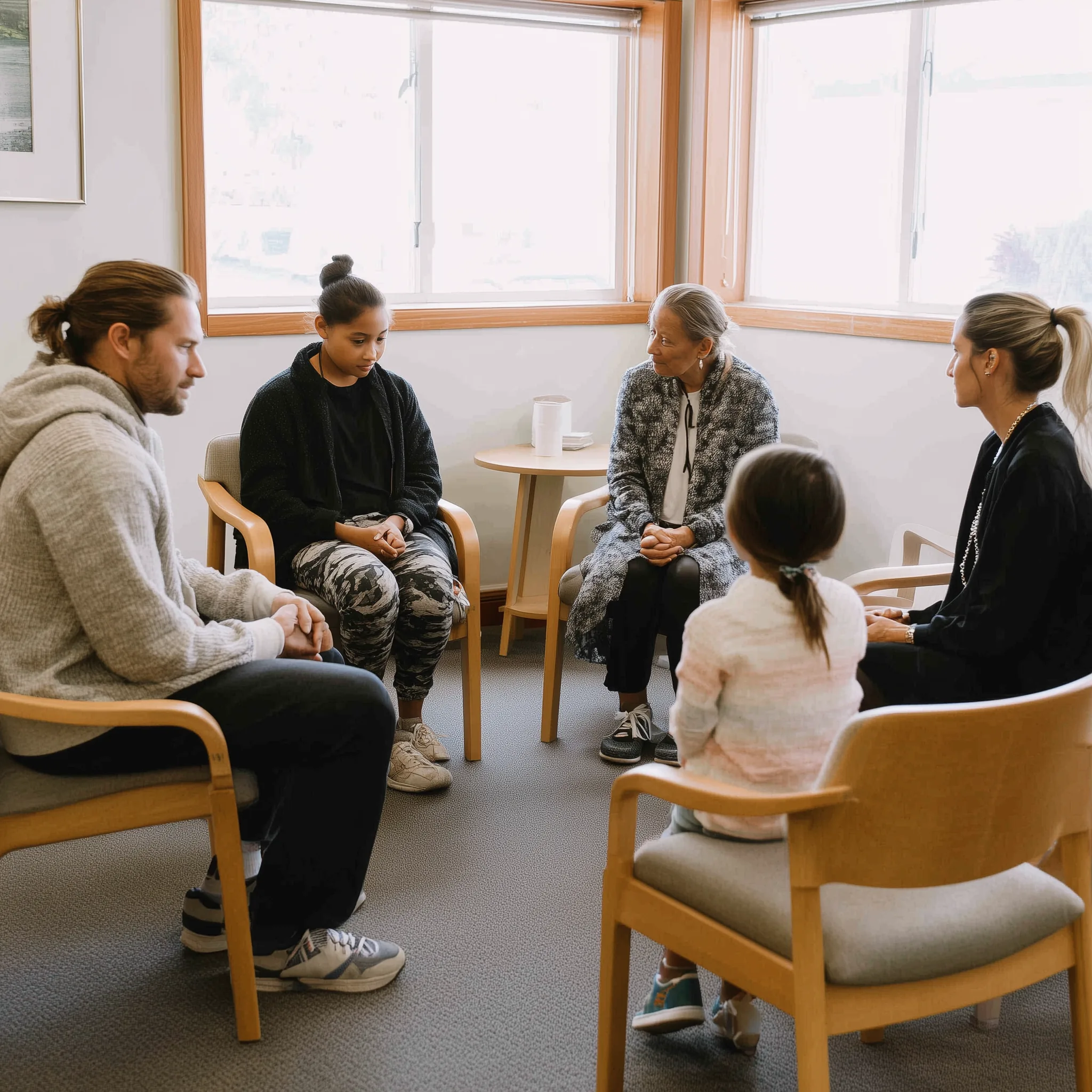
In Campbell River, Youth and Caregiver Counsellor provides strategies and support for families dealing with communication challenges and tension at home. A counsellor provides neutral space where everyone can be heard, helps identify patterns that escalate conflict, and teaches practical communication skills. The counsellor can meet with youth or caregivers alone or together. So, even if the other ‘side’ doesn’t want to participate we will try to help.
Email: CommunityProgramsCR@jhsni.bc.ca
Phone: 250-286-0611
The Program
Counselling for youth and families dealing with conflict or communication challenges.
Youth & Family Conflict Resolution
Counselling: Neutral space for family members to be heard.
Understanding next steps: Helping families understand what the issues are (including any safety issues) and helping you decide what the next steps should be.
Confidential support: Sessions without judgement.
Location: Campbell River
Eligibility
Youth & Caregiver Counselling is open to:
Youth and caregivers in Campbell River.
Youth and/or caregivers experiencing communication challenges or conflict.
FAQ
Frequently Asked Questions About Youth & Family Conflict Resolution in Campbell River.
Yes. What you tell the counsellor is private unless there is a safety concern that requires action.
What you tell the counsellor is private unless we hear someone is going to get hurt – then of course we have to tell someone. We will ask what you are ok with us sharing with your caregiver. Something to think about is that counselling works better if we’re able to share at least basic things with your caregiver (you came to the appointment, we talked about school or home, you’re doing ok). We don’t have to share details of what we talked about. We also realize that sometimes there are important reasons to keep things private.
Yes. The counsellor will use a Circle of Care form, explain how it works, and ask you to sign it.
Notes are kept in locked files or on a secure computer system. When counselling is finished, records are stored securely until the time comes for them to be shredded.
Our experience is that young people need to know counselling is confidential in order for them to feel safe enough to benefit from it. That said, we tell them that counselling works better if we’re able to share at least basic things with parents (attendance at appointments, the topics we talked about, if they’re doing ok). Some things we can’t keep confidential: if we hear someone is going to get hurt, or if the Court orders us to release information.
Yes. Youth or caregivers can contact the program directly to access support.
No. Services are free.
OUR IMPACT
“Thank you with tears in my eyes. You have been the only person who has helped me through this and I can’t thank you enough.”
– Youth and Caregiver Counselling Client